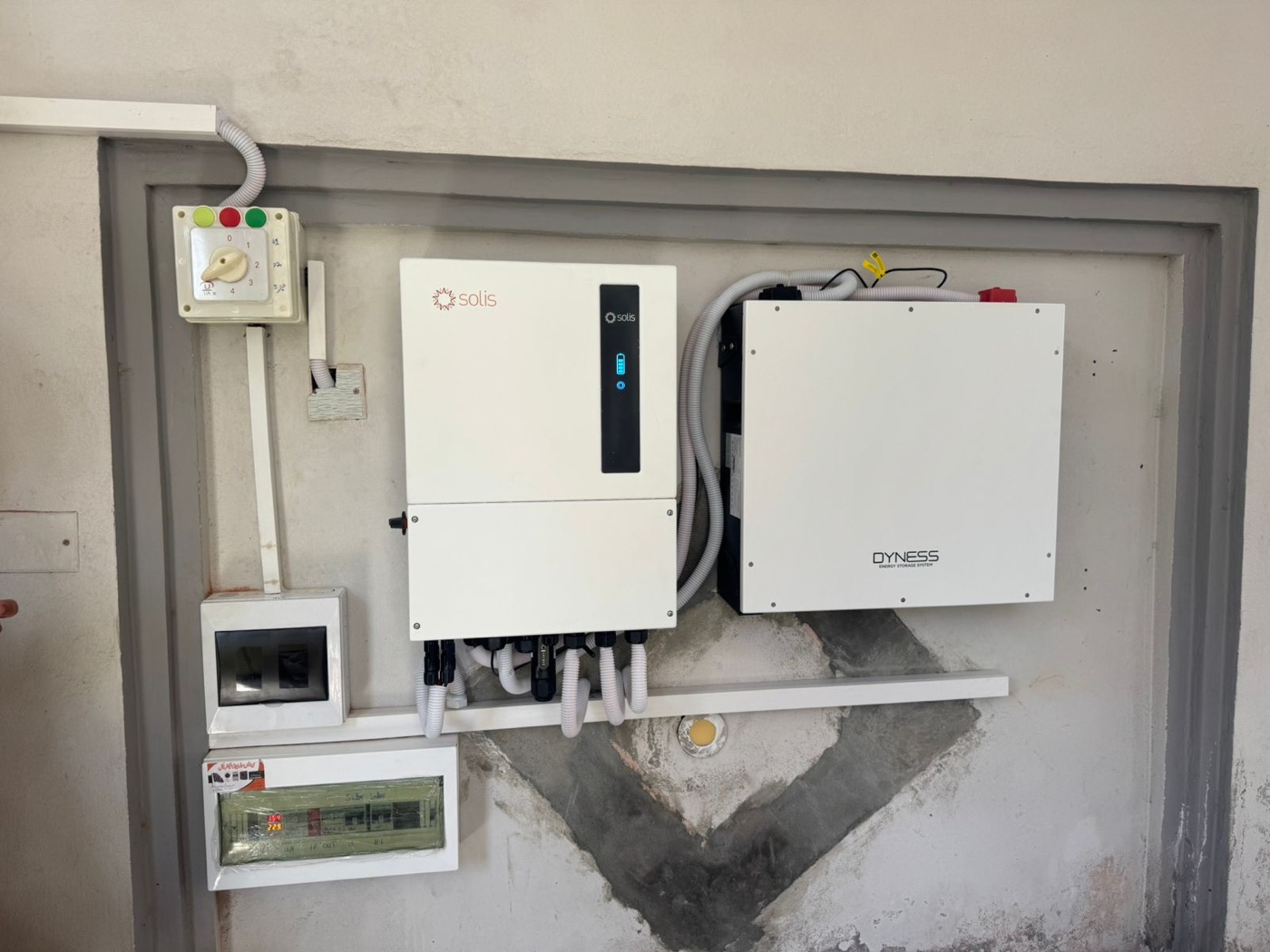
What a hybrid solar system actually does
A hybrid system uses three things working together: solar panels on the roof, a hybrid inverter, and a lithium or tubular battery. During daylight, the panels run the house directly. Any leftover charges the battery. At night, the battery powers the home. The grid only kicks in if both run dry, or if a heavy load (say, three ACs and an iron all together) momentarily exceeds the system.
That setup did not used to be the obvious choice. Until February 2026, most Lahore homes installed plain on-grid systems and sold surplus power back to LESCO at PKR 25 per unit. After the NEPRA Prosumer Regulations replaced net metering with net billing, the buyback rate dropped to PKR 8 to 11 per unit. Exporting power stopped being lucrative. Storing it for night use became smarter than selling it cheap.
Who hybrid makes sense for
Homes with a monthly bill above PKR 25,000. Offices, plazas and small factories that run lights and ACs daily. Anyone in a feeder that still gets load-shedding (parts of Wapda Town, Iqbal Town, Walton, and edges of Cantt). Hybrid pays back faster than on-grid for self-consumption households because it captures every watt of generation instead of sending the surplus to the grid for pennies.
It is not for everyone. Bills under PKR 15,000 do not justify the battery cost. Renters who may move within two years are better off on a small on-grid setup. Sites with no shading and round-the-clock daytime load (some shops, some offices) can do fine on grid-tied.
What gets installed
- Tier-1 panels (Jinko, Longi or Canadian Solar) — typically 585 W bifacial modules.
- Hybrid inverter sized to your peak load. Common brands installed in Lahore: Inverex, Huawei, Growatt, Solis. Sizes from 3 kW to 30 kW for residential and SME use.
- Lithium battery bank, usually 5 kWh, 10 kWh or 16 kWh. Pylontech, BYD, Dyness and Inverex IP series are common. Tubular battery is still used where budgets are tight.
- Galvanized rooftop structure rated for Lahore wind loads.
- AC and DC protection (breakers, fuses, SPD), earthing and a small distribution panel.
- WiFi monitoring kit so the system can be checked from a phone.
Cost range in Lahore for 2026
Rough installed prices for hybrid systems with lithium battery (full BoQ including labour, structure and wiring):
| System size | Battery | Price range |
|---|---|---|
| 5 kW hybrid | 5 kWh lithium | PKR 700,000 – 950,000 |
| 10 kW hybrid | 10 kWh lithium | PKR 1,400,000 – 1,800,000 |
| 15 kW hybrid | 10–16 kWh lithium | PKR 2,000,000 – 2,600,000 |
| 25 kW hybrid | 16–30 kWh lithium | PKR 3,400,000 – 4,400,000 |
Tubular battery brings the cost down by 25 to 35 percent at the price of shorter lifespan and more maintenance. Not always the wrong call, but worth thinking about before going for the cheapest line item on the quote.
Want a sized quote, not a guess?
Send your bill or use the calculator. A right-sized BoQ comes back within the day.
Open Calculator WhatsApp QuoteHow the install runs
Day one: structure laid out and bolted. Day two: panels mounted, DC cabling pulled, inverter and battery wall-mounted. Day three: AC tie-in, earthing, breakers, commissioning. The whole job takes two to four days for residential sizes. Larger commercial jobs run longer because of structure scale and crane logistics.
If net billing is wanted on top of the hybrid, the LESCO application starts on day one too. Drawings, feasibility, agreement and bi-directional meter take four to eight weeks to finalize. The system runs and saves on the bill from day five regardless — net billing just adds export credits on top.
Warranty
Panels carry a 25-year manufacturer performance warranty (about 85 percent output at year 25). Inverters carry 5 to 10 years depending on brand. Lithium batteries carry 5 to 10 years or a stated cycle count. The installation itself carries a 1-year service warranty from Solar Installation Lahore — wiring, structure, commissioning.
Common mistakes the team sees
Over-sized panel arrays paired with under-sized batteries. The panels make plenty of daytime power but there is nowhere to store the surplus, so it gets dumped or sold cheap. The right ratio depends on daytime load pattern.
Cheap "tier-2" inverters that look identical on a brochure but fail in their second summer. Lahore hits 52 °C in May. Cheap inverters do not like that.
Ignoring earthing because it is a small line item. Bad earthing is the single most common cause of "phantom" inverter faults after monsoon.
Expecting 24-hour autonomy with a small battery. A 10 kWh battery covers a typical house for one night, not two cloudy days in a row. Be honest about what the system is sized for.